Travel Story
⚓ 2 Days in Split: A First-Time Itinerary for Roman Ruins, Harbor Walks, and Adriatic Light

Sponsored
Ads
splitcroatia
Did you know that one of Europe's most famous Roman sites is not a separate ruin outside the city, but the historic heart of a living city? That is one of the reasons Split lands so well on a short trip. You are not visiting around history here. You are moving through it.
This 2 days in Split itinerary is designed for general travelers who want a fast-paced, practical, and exciting first trip. It focuses on Diocletian's Palace, Old Town, the Riva, Marjan viewpoints, beach time, and smart hotel and airport choices, so two days feel full rather than frantic.
Split works especially well for a short break because it gives you Roman history, Adriatic color, good food, and easy waterfront atmosphere without needing complicated logistics. If you want a Croatian city trip that feels scenic from the first hour, this is one of the strongest options in the country.
Why Visit Split?
Split is one of the easiest places in Croatia to recommend to first-time visitors because it feels useful and beautiful at the same time. The city has real heritage, real energy, and enough variety to make a short trip feel layered.
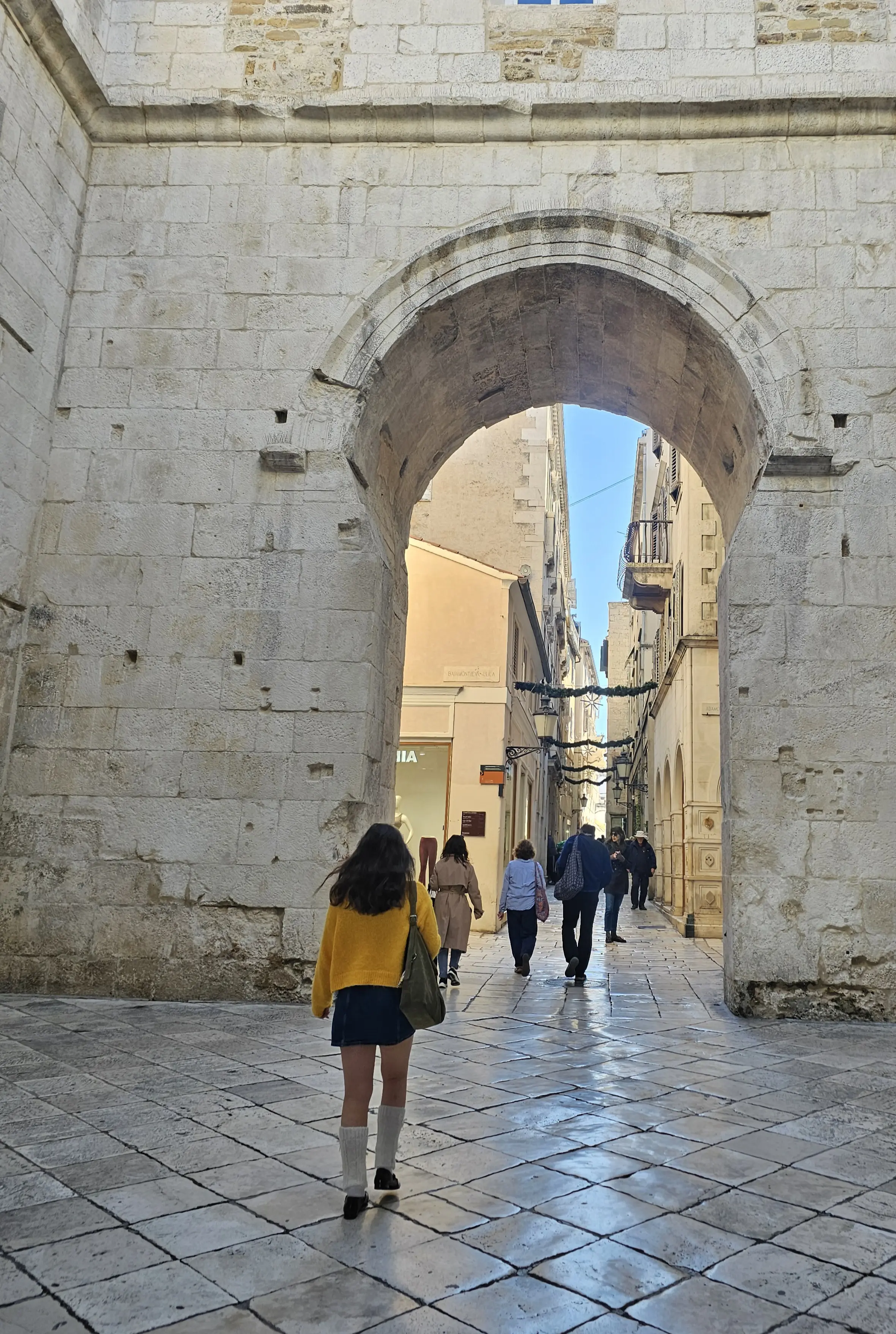
- History: Diocletian's Palace is one of the most unusual historic centers in Europe because it is not a fenced-off monument. It is part of everyday city life.
- Scenery: Harbor views, palm-lined promenades, old stone lanes, and Marjan panoramas all sit within a compact area.
- Food: Fresh seafood, Dalmatian comfort dishes, pastries, coffee culture, and sunset drinks all fit naturally into a short stay.
- Convenience: The old core is walkable, Split Airport is relatively close, and major sights connect easily without much transport stress.
- Atmosphere: The Riva, Veli Varos, and the evening mood around the palace make Split feel lively without being overwhelming.
- Uniqueness: Few destinations let you explore a Roman imperial complex in the morning and swim in the Adriatic the same afternoon.
⏳ Is 2 Days Enough for Split?
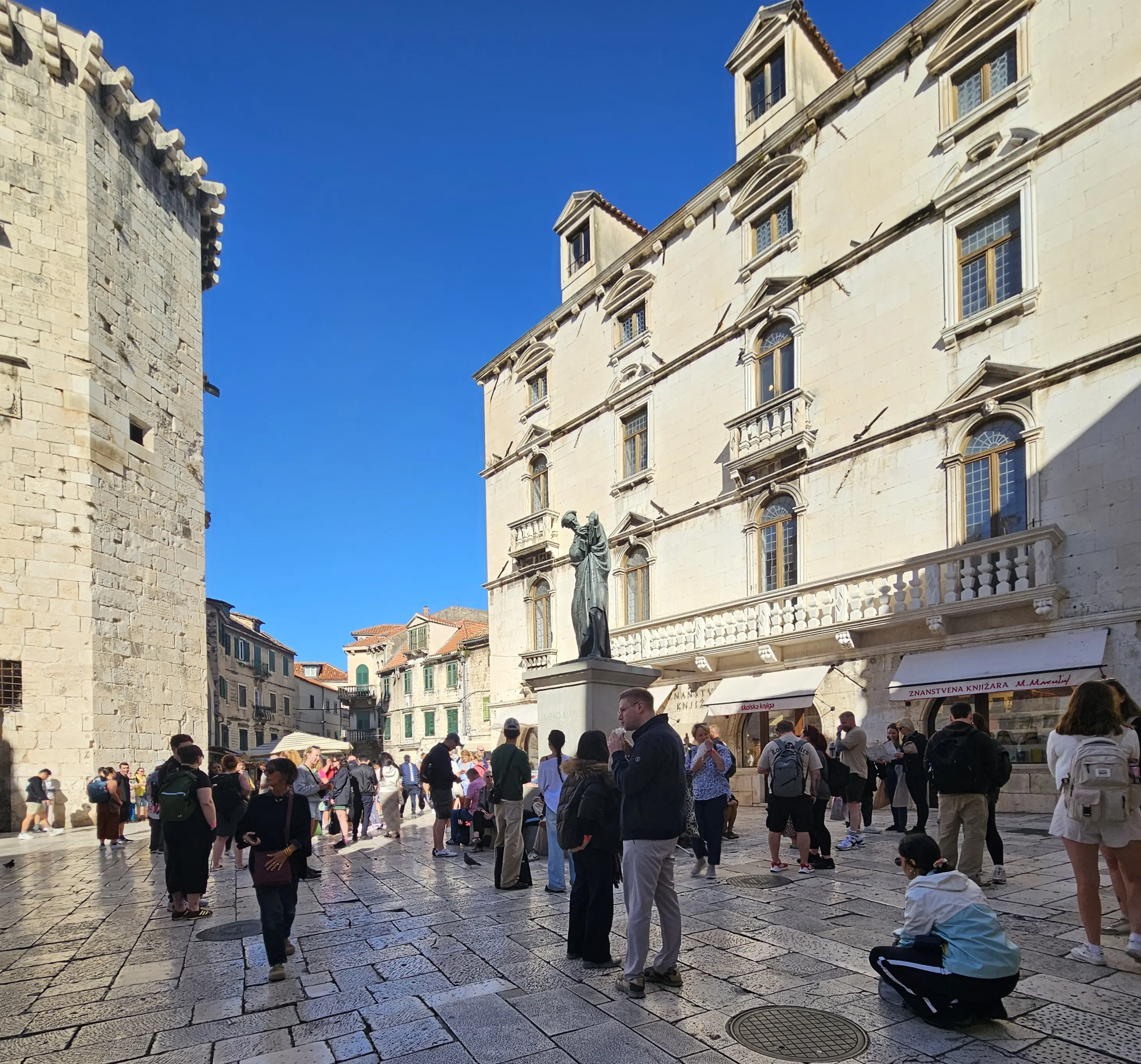
Yes. 2 days is enough for Split if you are a first-time visitor focused on the essentials. In that time, you can experience Diocletian's Palace properly, walk the waterfront, take in a big viewpoint, add a beach break, and still eat very well.
This pace suits travelers who like:
- Early starts and efficient routing
- Big-name highlights over deep museum time
- One central hotel base
- Mixing history, scenery, and a little beach time
What two days is not enough for: multiple island day trips, a relaxed resort stay, or a wide Croatia route that tries to squeeze in Split, Hvar, Trogir, Krka, and Dubrovnik all at once. But for a sharp first-timer Split itinerary for 2 days, it works very well.
🌤 Best Time to Visit Split
Split has a Mediterranean climate, so the real question is not whether the city is pleasant, but how much heat, crowding, and beach energy you want.
Best overall: May to June and September
For most travelers, this is the sweet spot. The weather is usually warm, daylight is long, and sightseeing is more comfortable than in peak summer. These months are especially good if you want to combine Old Town walking with Marjan or beach time.
Peak summer: July to August
This is the hottest, busiest, and most expensive period. Split feels energetic and very photogenic, but stone streets heat up fast and central hotels book strongly. It still works for a short trip if you start early and avoid overscheduling the middle of the day.
Shoulder-low season: April and October
These months are great if your priority is walking, atmosphere, and easier hotel pricing rather than reliable swimming weather. The city usually feels calmer, and the old center is much easier to enjoy slowly.
Winter: November to March
Split is quieter and often cheaper in winter, but a fast-paced first trip built around sea views, beaches, and long evenings loses some of its punch. It is more appealing for return visitors than for a first classic weekend-style itinerary.
For most travelers planning 2 days in Split, the smartest months are late May, June, and September.
🛏 Top Places to Stay in Split
On a two-day trip, the main decision is simple: pay a bit more to stay central, or save money and spend more time moving around. With only 48 hours, central usually wins.
Quick area advice:
- Best for first-timers: Old Town edge, Riva, or Bacvice
- Best for atmosphere: Inside or just outside Diocletian's Palace
- Best for quieter evenings: Veli Varos or the Marjan side
- Best for better value: East of the center, if you accept less walkability
🚄 Getting from Split Airport to the City Center
Most travelers arrive through Split Airport (SPU) in Kastela. Split Airport's official ground-transport page says the airport is about 20 kilometers from Split, so transfer decisions matter more than the map suggests, especially in summer traffic.
Train
- No direct airport train: Split has a rail station by the ferry port, but there is no direct train from the airport.
Airport shuttle bus
- Operator: Split Airport still lists a dedicated shuttle, and Pleso Prijevoz's Split page currently shows about 30 minutes to the main bus station.
- Current fare note: Pleso's English Split page currently lists EUR 8 one way.
- Timing: Pleso says airport departures are usually 30 to 40 minutes after landing.
- Practical caution: Split transport pages are not always updated perfectly in sync, so it is wise to check the official ticket page again just before travel.
- Best for: Travelers staying near the ferry port, old town, or Bacvice who want the easiest non-private option.
Public bus
- Route: Promet Split's official airport line page lists Bus 37 between the airport and Split.
- Travel time: Promet currently lists about 50 minutes to Split.
- Price: Promet's official airport line page currently shows EUR 3.00 to Split.
- Frequency: Daytime service is generally frequent, and Promet's posted timetable currently runs from early morning into the late evening.
- Best for: Budget travelers with light luggage and a little patience.
Taxi, rideshare, or private transfer
- Travel time: Usually around 30 minutes, depending on traffic and your hotel location.
- Convenience: Best for door-to-door arrivals, late flights, or travelers staying outside the most central zone.
- Rideshare: Uber's current Split city page and Bolt's Split page both confirm service in the city.
- Budget level: Mid-range to higher.
Practical tip: if you are staying inside the palace lanes, your final few minutes may still be on foot over stone streets.
🚇 Getting Around Split
Central Split is highly walkable, and that is exactly why the city works so well for a short trip. Once you are around the palace, the Riva, and nearby neighborhoods, you can do most of the core itinerary on foot.
- Walking: Best for Diocletian's Palace, Old Town, the Riva, Bacvice, and most classic first-time sightseeing.
- City buses: Promet Split is the main local operator. It is useful for longer hops, the airport bus, or hotel zones outside the center.
- Promet app: Promet promotes its own app for buying single tickets and checking real-time bus information.
- Taxis and rideshare: Great for late returns, hot afternoons, or trimming uphill walking around Marjan-side accommodation.
- Ferries and catamarans: Only necessary if you are adding islands or onward travel. For two days, ferry planning usually creates more friction than value.
- Driving: Not recommended for a short Split city break. Parking and old-center logistics are simply not worth it.
Practical tip: wear shoes with grip. The old stone surfaces around Split can get slippery, especially when polished smooth by years of foot traffic.
✅ Must-Do Activities in Split
These are the classic Split experiences that repeatedly show strong review volume on Tripadvisor, Viator, and other major travel platforms.
🗺 The Itinerary
This route is built for travelers who want the biggest Split highlights with efficient routing. The key is to stay central, walk hard, and avoid turning a two-day city break into a transport puzzle.
Day 1: Diocletian's Palace, Old Town, and a Riva Sunset
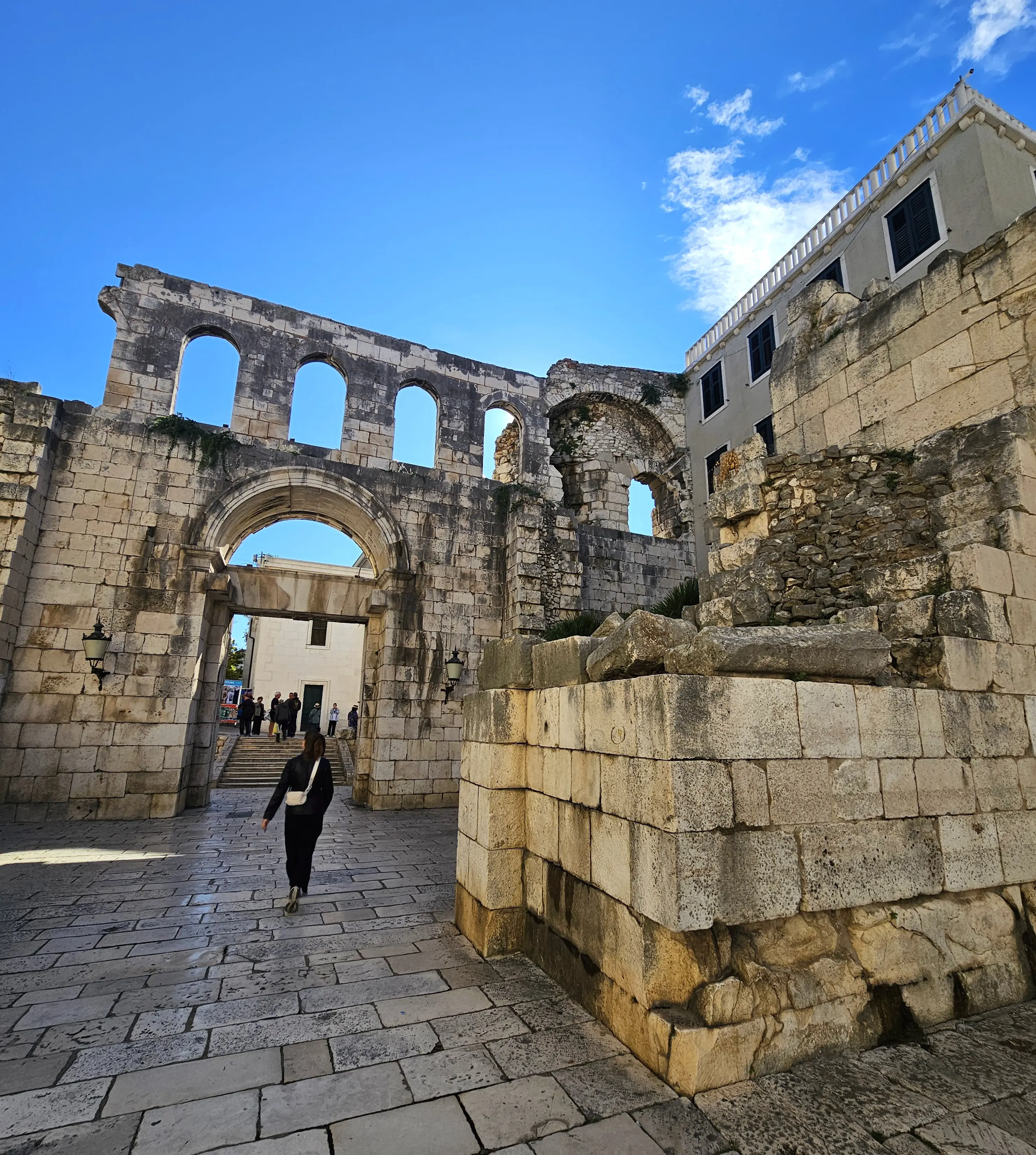
Morning: Start early inside Diocletian's Palace. Walk the Peristyle, pass through at least one of the major gates, and explore the lanes that make Split feel more like a living Roman labyrinth than a museum district. If you want more context, this is also the smartest time for a short guided old-town walk.
Afternoon: Climb the Cathedral of Saint Domnius bell tower if the line looks manageable, then slow down around the palace edges, side streets, and small squares. Have lunch somewhere away from the most obvious tourist strip if possible, then work your way toward Narodna Square and the Riva.
Evening: Stay near the waterfront. Split's first-night reward is not another major monument. It is the city's evening mood: harbor views, palm silhouettes, café terraces, and the old center starting to glow after dark.
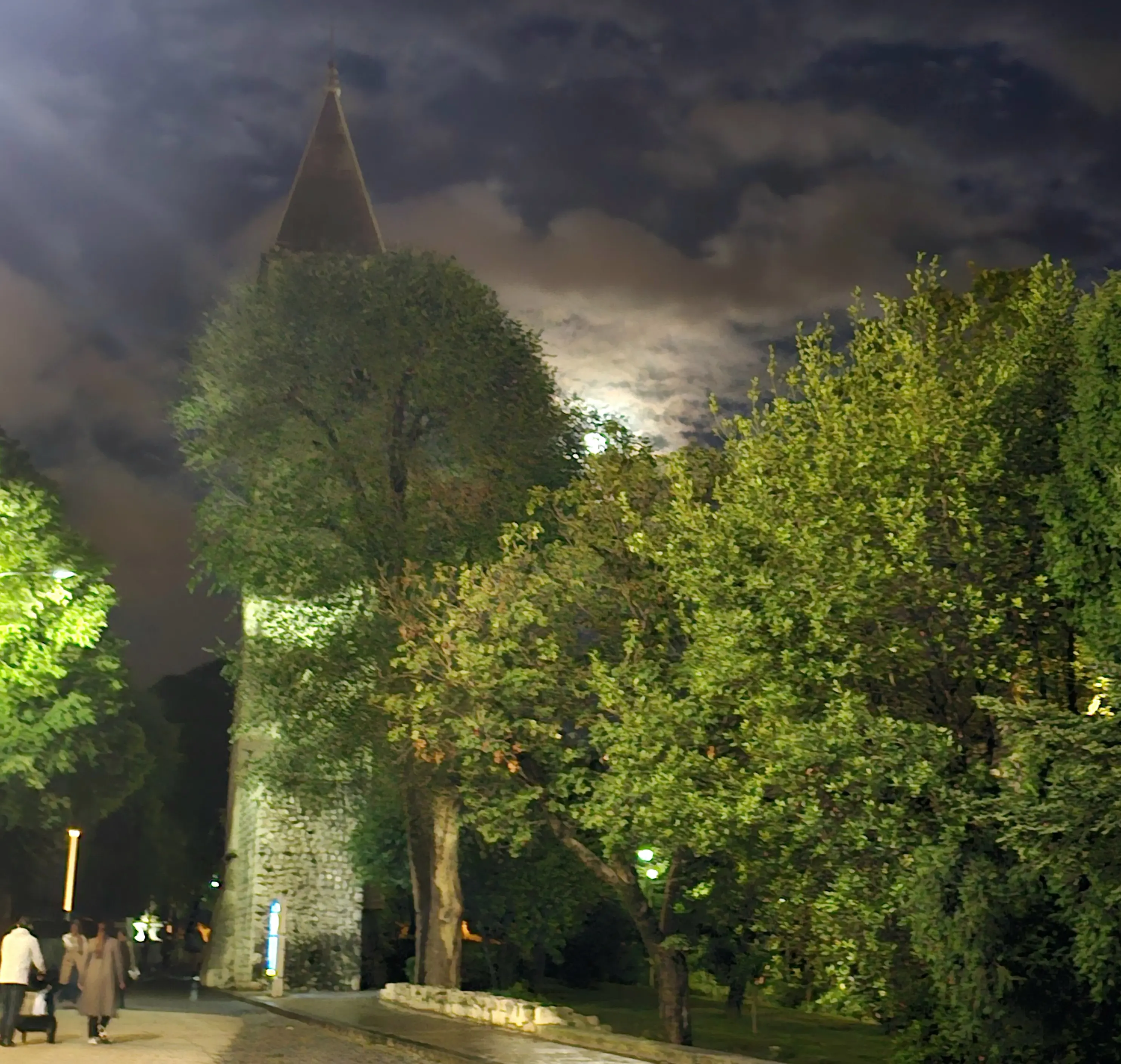
Optional food or photo idea: Take photos from Matejuska or the harbor edge at golden hour, then finish with seafood or black risotto near the center.
Practical tip: Keep day one mostly on foot. It is the easiest way to settle into the city and avoid wasting time on short transport hops.
Day 2: Marjan Views, Beach Time, and One Last Palace Walk
Morning: Head to Marjan Park before the heat rises. Go via Veli Varos if you want the route to feel more local and atmospheric. Split's best short-trip viewpoint payoff is often here rather than from a paid attraction. This is where the city finally reveals how tightly the old center, harbor, beaches, and islands fit together.
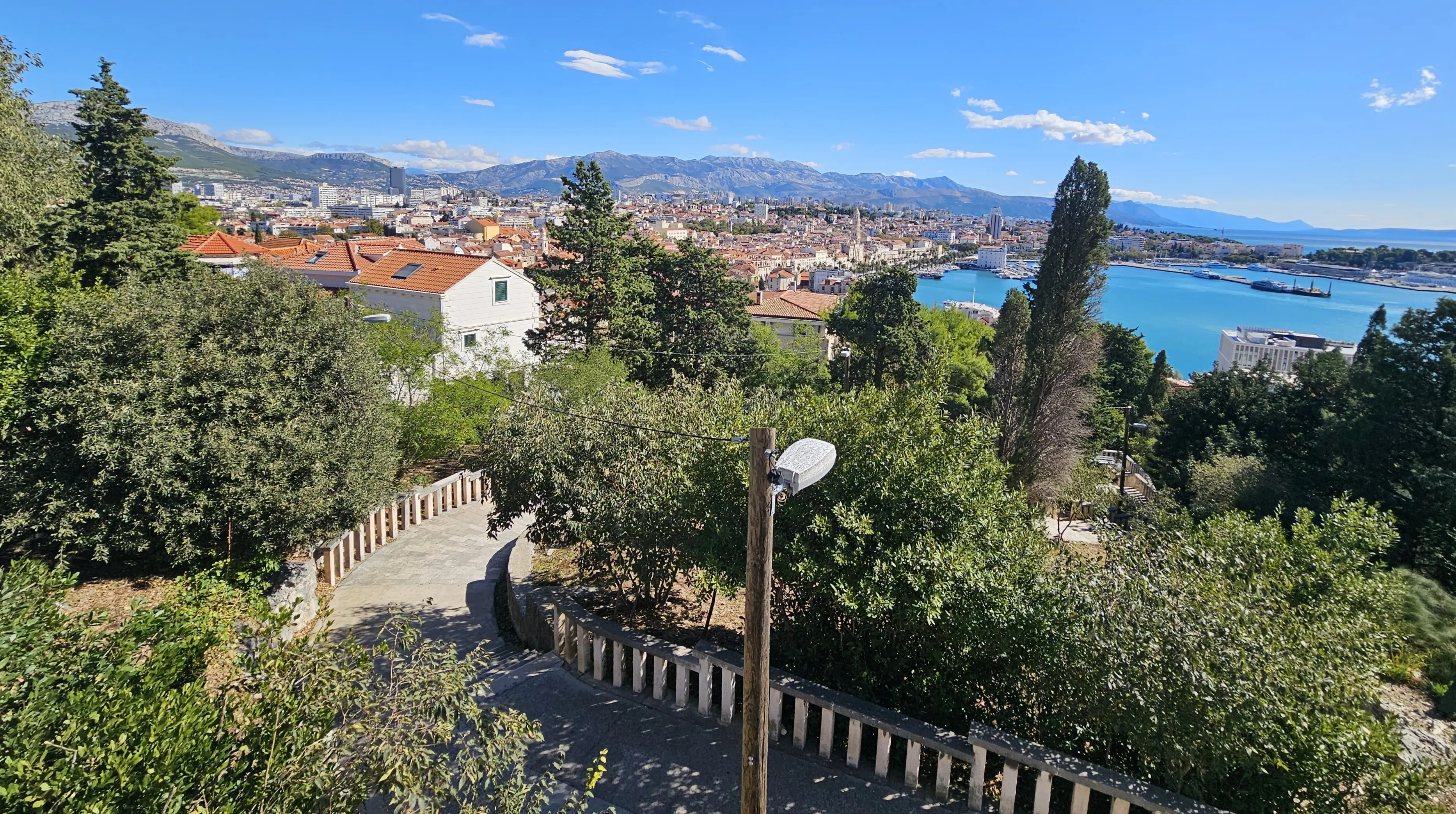
Afternoon: Choose your sea break. Bacvice is the easiest urban option if you want convenience, people-watching, and a quick swim. If you prefer prettier scenery and are willing to travel a little farther, head toward the Marjan side and Kasjuni. For most first-timers on a short trip, one swim stop is enough.
Evening: Return to the center for your final dinner and one last pass through the palace lanes. Split is especially good after dark because the stone, arches, and narrow passages feel calmer and more cinematic than during the midday crush.
Optional food or photo idea: If you skipped the bell tower on day one, this is a good second chance. Otherwise, do sunset from the Marjan side and keep dinner simple and central.
Practical tip: If you are tempted by a Blue Lagoon boat trip, treat it as a swap for the Marjan-and-beach afternoon, not an extra layer on top of the full city plan.
Best Local Foods to Try in Split
- Black risotto: One of the city's most recognizable Adriatic dishes
- Pasticada: A rich Dalmatian beef classic worth trying at least once
- Soparnik: A traditional savory pie tied closely to this part of Croatia
- Grilled fish: Best for a simple, very local harbor dinner
- Octopus salad: A smart warm-weather lunch choice
- Fritule: A good sweet bite if you want something small rather than a heavy dessert
- Dalmatian wine: Easy to build into a sunset meal or final-night drink
Estimated Daily Budget for Split
Split is not cheap in peak summer, but it is usually more manageable than Dubrovnik. These are broad daily planning ranges only.
- Budget-conscious: about EUR 90 to EUR 150 per person per day
- Mid-range: about EUR 170 to EUR 290 per person per day
- Splurge: about EUR 340+ per person per day
Typical daily costs might include:
- Transport: roughly EUR 3 to EUR 35 depending on airport transfer and taxi use
- Food: roughly EUR 25 to EUR 90+ depending on restaurant style
- Attractions and tours: roughly EUR 10 to EUR 120+ depending on viewpoint tickets and any boat add-on
Best Photo Spots in Split
- Marjan viewpoints: Best for city, harbor, and island panoramas
- Cathedral bell tower: Great for rooftops and a tighter old-town angle
- The Peristyle: The signature Roman setting in the center of the city
- The Riva at golden hour: Best for Split's palm-lined waterfront mood
- Matejuska: Strong for boats, sea light, and a local evening feel
- Kasjuni or the Marjan side: Better if you want coast-and-pine scenery instead of architecture
What to Book in Advance
- Central hotels: Especially if you want Old Town edge, Riva, or Bacvice in summer
- Airport transfer: Smart for late arrivals or very short stays
- Any must-have boat trip: Book this early if you plan to swap it into your 2-day trip
- A special sunset dinner: Popular waterfront tables fill fast in peak season
- Onward ferries: Only if you are continuing to an island immediately after Split
Common Mistakes Tourists Make in Split
- Treating Split only as a ferry gateway and not giving the city itself enough time
- Staying too far from the center on a very short trip just to save a little money
- Trying to cram in Hvar, Trogir, and a full city visit in only two days
- Climbing Marjan in the hottest part of a summer afternoon
- Expecting Bacvice to be the prettiest beach in Dalmatia rather than the easiest urban beach
- Dragging a rental car into the center and then losing time to parking stress
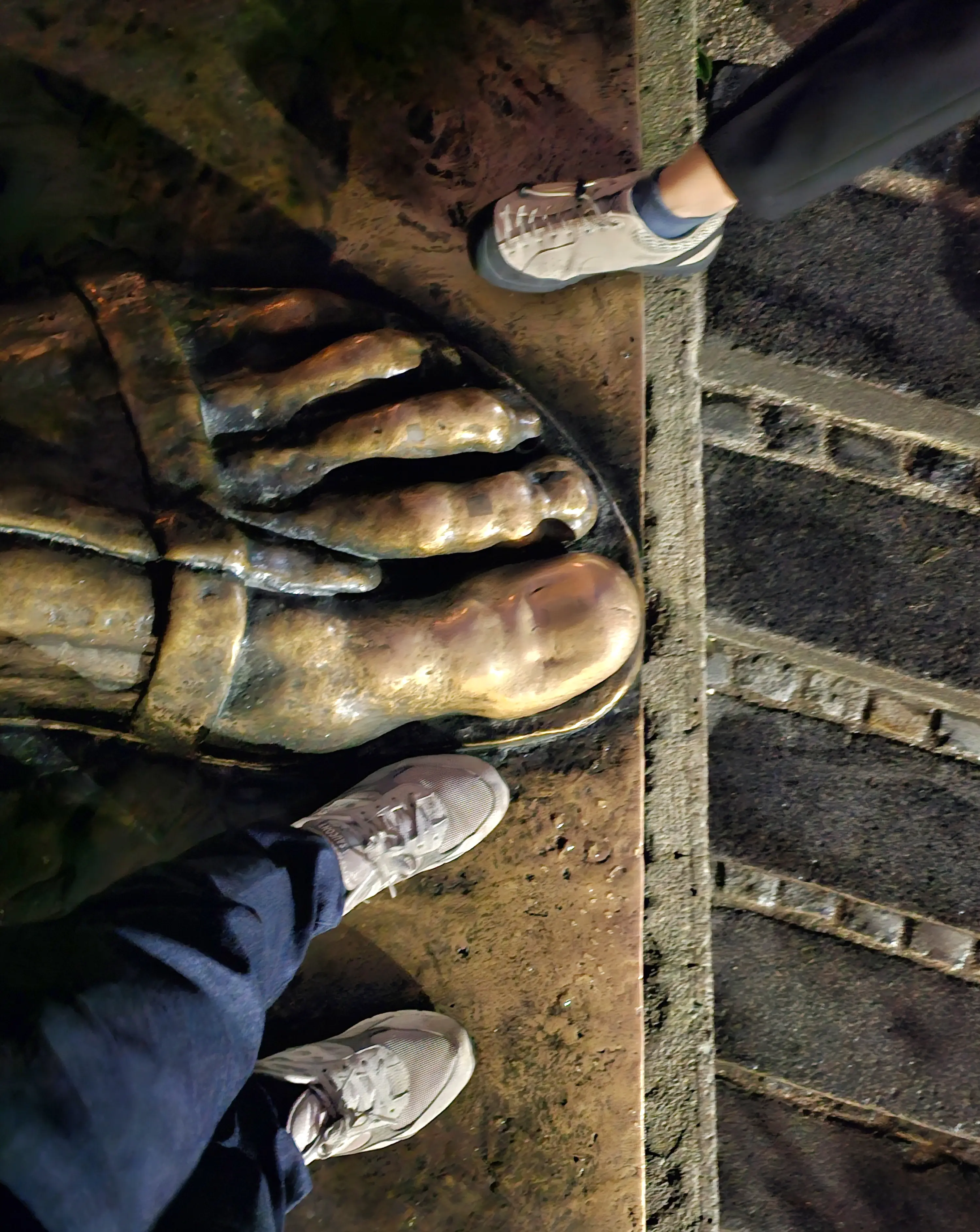
- Underestimating how slippery old stone streets can feel in smooth shoes
⚠ Tips for Split
- Start early inside the palace: The atmosphere and photos are better before the middle of the day.
- Stay central if possible: Two days is too short to waste on awkward commuting.
- Carry swimwear in warm months: Split makes spontaneous sea stops very easy.
- Protect yourself from the sun: Stone, stairs, and waterfront heat can add up fast.
- Use cards widely, but keep some cash: Cards are common, but small kiosks and casual spots can still favor cash.
- Be careful on polished stone: Especially in sandals or smoother-soled shoes.
- Do not overbook the second day: Split works best when you leave a little space for the waterfront and evening rhythm.
- Check shuttle details before landing: Official Split transport pages are useful, but not always updated in perfect sync.
- Book your key hotel early for summer: Strong first-timer areas fill quickly.
FAQ: Split Itinerary Questions First-Time Visitors Ask
Is 2 days enough for Split?
Yes. Two days is enough for a strong first trip focused on Diocletian's Palace, the waterfront, Marjan, and one beach stop.
What is the best area to stay in Split for a 2-day trip?
For most first-timers, the best areas are the Old Town edge, the Riva, Bacvice, or the Marjan side. These give you the best balance of walkability and atmosphere.
Do I need a car in Split?
No. For a short Split city break, a car is more hassle than help. Walking, local buses, and taxis or rideshare are enough.
Is Split expensive?
Split can feel expensive in peak summer, especially near the waterfront, but it is usually more manageable than Dubrovnik and works across several budget levels.
Should I do a boat trip from Split on a 2-day visit?
Only if the sea day matters more to you than Marjan and slower city time. On a 2-day visit, a boat trip usually works best as a deliberate swap rather than an extra.
Can I do Hvar as a day trip from Split?
You can, but it often makes a 2-day Split trip feel too rushed. For most first-time visitors, keeping the focus on Split itself is the smarter choice.
Final Thoughts
Split is one of the best short city breaks in Croatia because it gives you a lot very quickly: Roman history, waterfront energy, big views, and easy access to the sea.
If you want 2 days in Split to feel exciting, efficient, and worth the flight, this itinerary is a strong place to start. Go for the palace, stay for the harbor evenings, and leave a little room for Adriatic light to do the rest.